Teklek was a lot of fun to build. It’s a riff on Aztlán, an old board game I enjoyed playing but found mechanically cumbersome, mostly because of how much counting the board version asks of you. That made it a great candidate to be built online, where the computer does the counting.
So I worked with Claude to emulate the original first, and then branched out in a few fun ways.
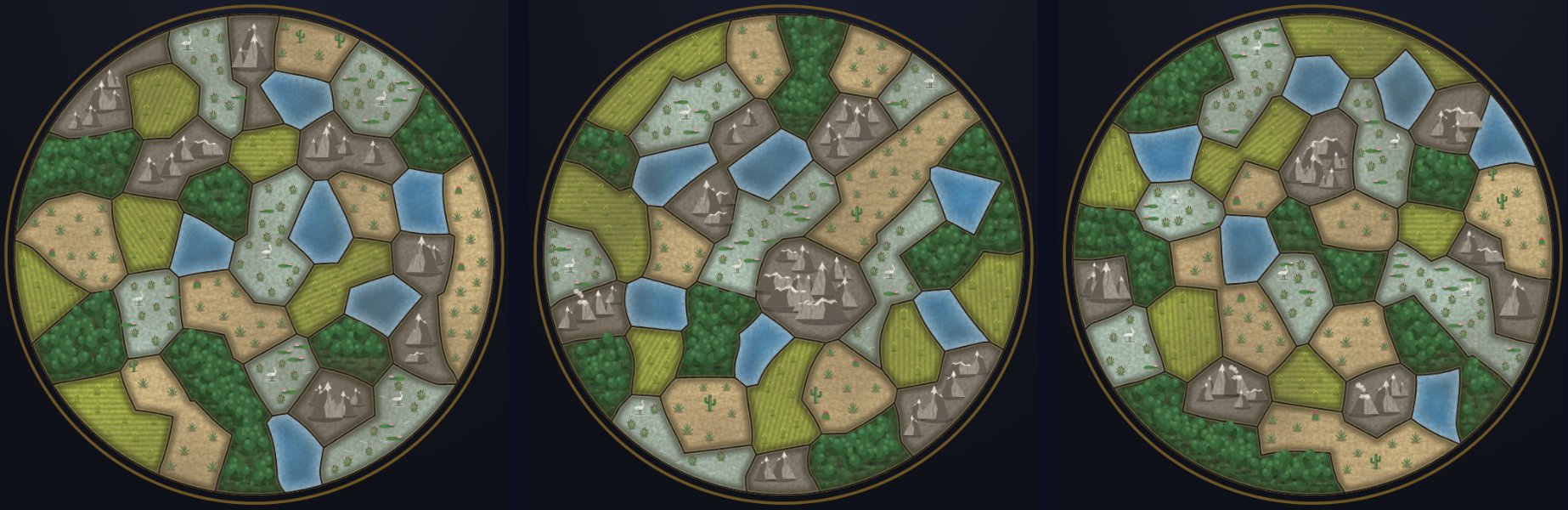
Every game is on a generated board, so you can play on any board, and no two games play exactly the same.
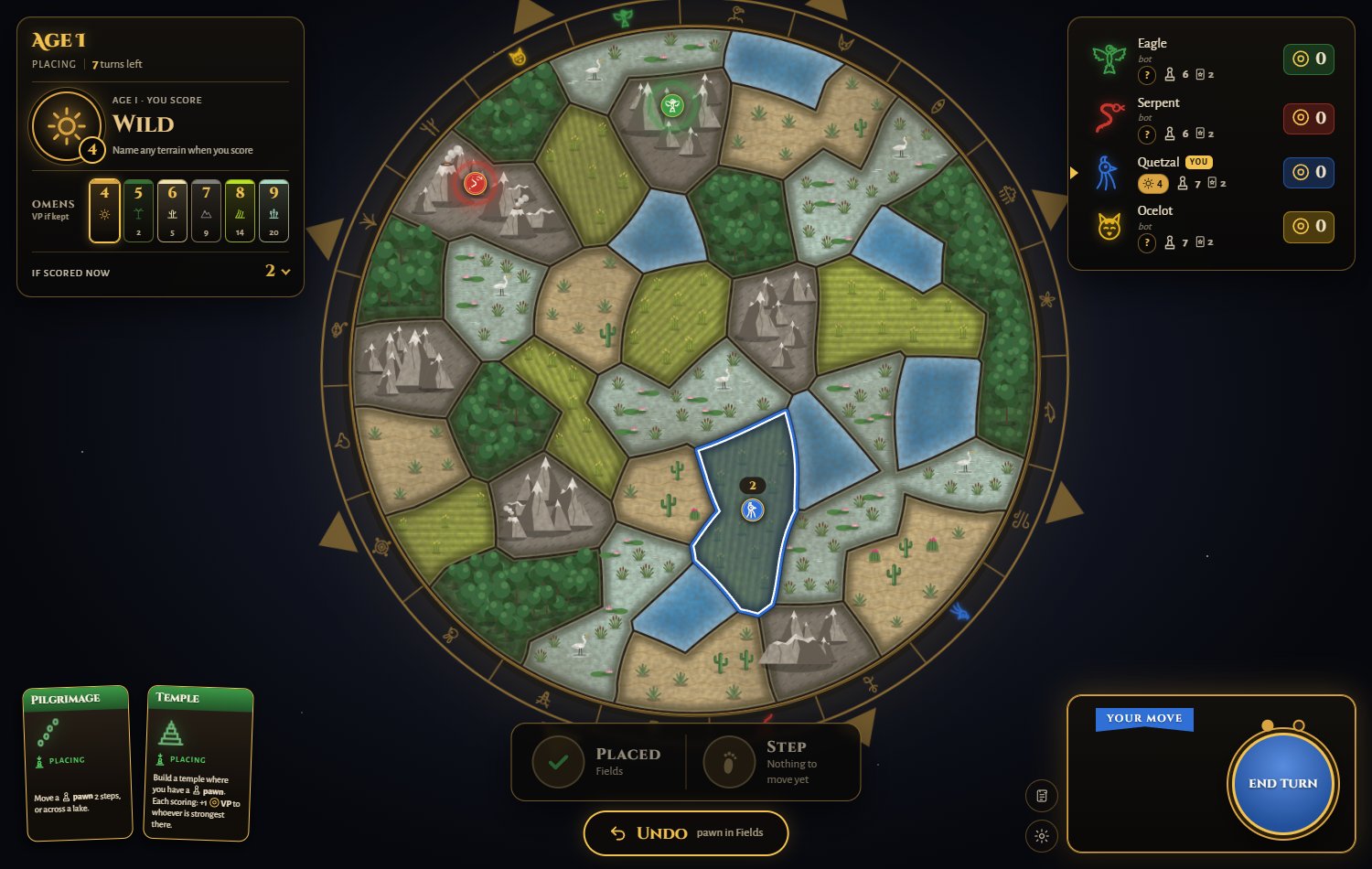
I fully reworked the cards. Prosperity cards in the original were fairly limited and mostly fed into scoring. I turned them into a way to embellish the placing phase, which is the lion’s share of the game: build a temple that pays out every scoring, or move a pawn two steps, or across a lake.
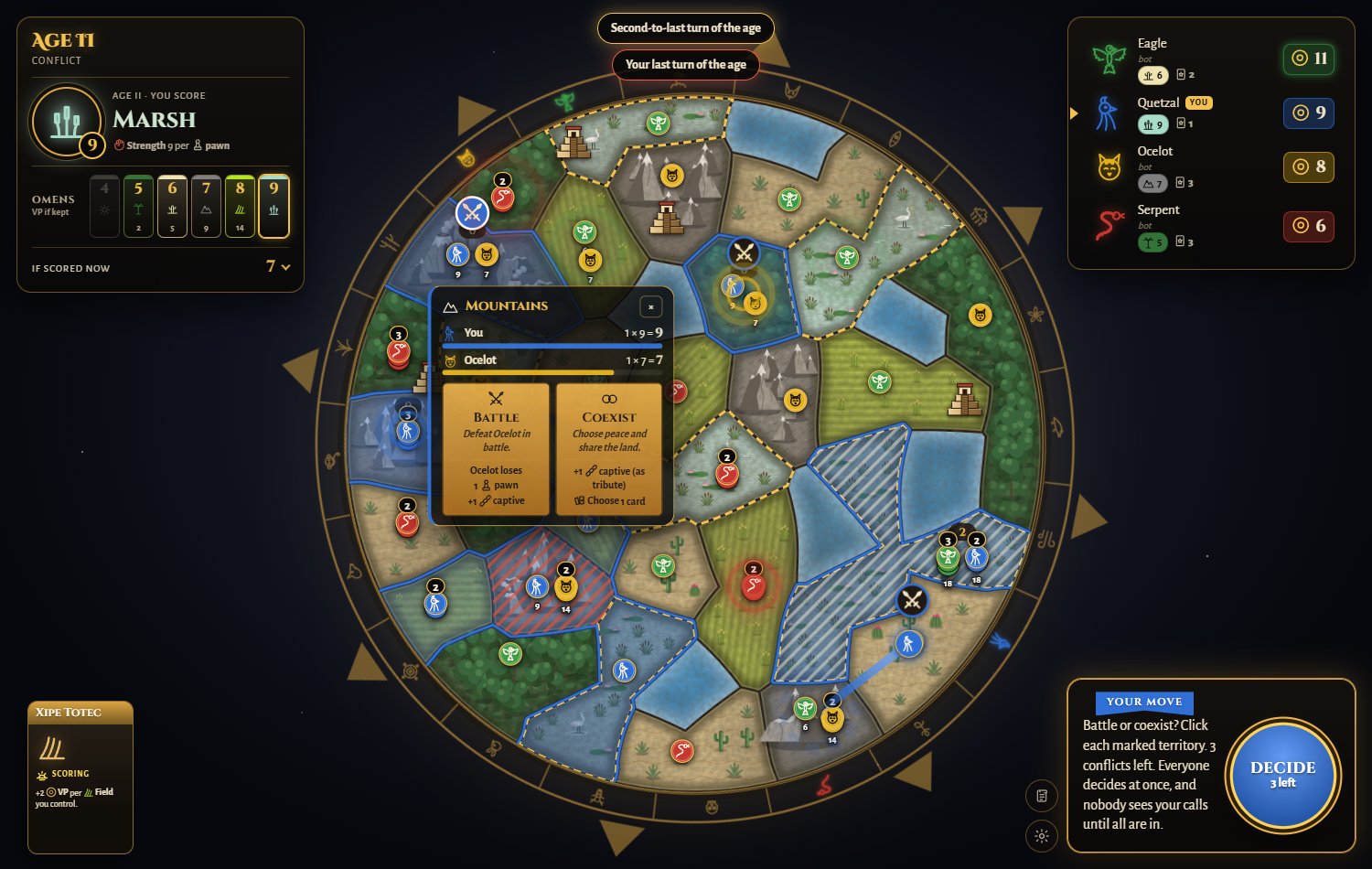
I also added captives. Winning a battle now takes the loser’s pawns as captives, which are basically a currency you spend going into the next age: an extra pawn, more strength, or a curse on a rival.
Testing it with bots
Because the game is deterministic, Claude can play it against itself hundreds of times under any set of rules. When I played with Brian and felt the snowball (the battle winner takes captives and power into the next age, and the loser is left with a handful of pawns), we didn’t have to guess at a fix. We ran 400 bot games for each candidate rule, on the same seeds, and looked at how far the winner finishes ahead, how often someone who wasn’t leading comes back to win, and how lopsided the board gets.
Captives on their own widened the average winning margin from about 22 points to 32. Adding Vengeance, where every two pawns you lose in battle come back as an extra pawn next age, pulled it back to 23 and lifted comebacks from 49% to 54%.
A different version of Vengeance did a bit better on comebacks, but I went with the one that’s easier to understand.
The same setup prices every card (one seat starts holding it, and we see how much more often that seat wins) and calibrates the bots. There are eight difficulty tiers, measured against stand-in players, the strongest of them modelled on me after four games, so a first game is winnable.
It’s definitely the most polished thing I’ve built and published, and the thing I’m happiest to show other people.
I’m excited to keep iterating on it. The Mesoamerican motifs are probably sticking around too, for the turn-based games I keep stamping out.